English
 中文简体

Author: HUIRUI
Date: Nov 25, 2026
How Do You Close a Card Table? Step-by-Step Tips From Our Factory Floor
Content
- 1 First, Know Which Card Table You're Folding
- 2 The Basic Sequence That Works on Almost Every Card Table
- 3 Closing a Fold-in-Half Table
- 4 Common Mistakes We See Again and Again
- 5 A Quick Reference by Table Style
- 6 Storing It So It Opens Easily Next Time
- 7 If the Table Fights Back
- 8 How We Build a Table That Closes Cleanly
A card table looks simple until you are standing over it at the end of a long evening, wondering which way the legs are supposed to swing. We build folding tables every day in our workshop in Yuyao, so we have watched this small moment go right and wrong thousands of times. The good news is that closing a card table is a thirty-second job once you understand what the mechanism is doing.
Below is the sequence we walk new staff through on the factory floor, plus the small habits that keep a table folding smoothly for years instead of developing a stiff leg or a bent bracket.
First, Know Which Card Table You're Folding
"Card table" covers several different mechanisms, and the closing method depends entirely on which one you own. Before you touch anything, flip the table onto its side and look underneath. You will usually see one of three arrangements.
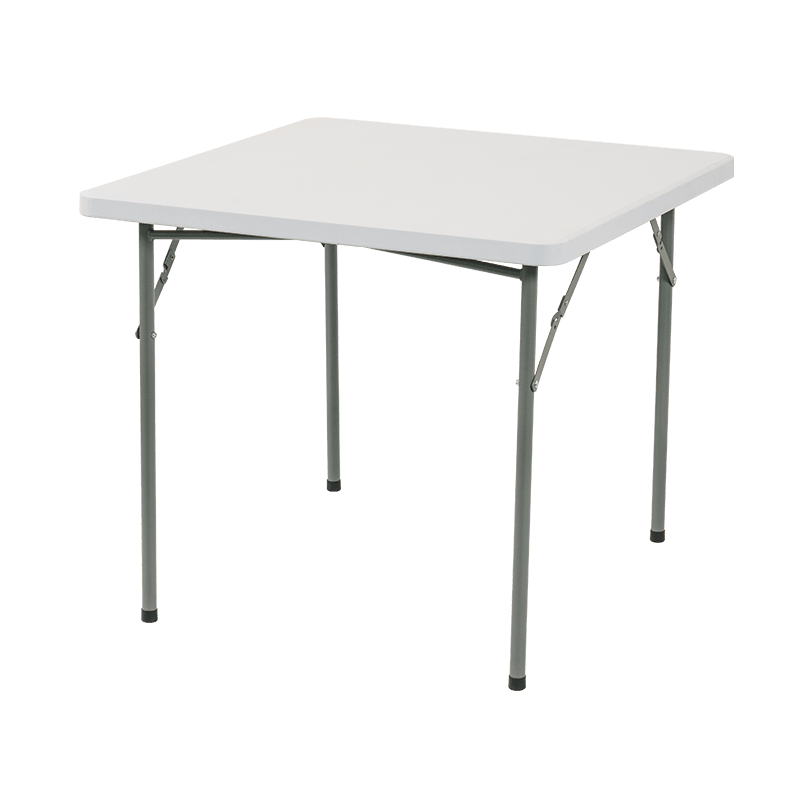
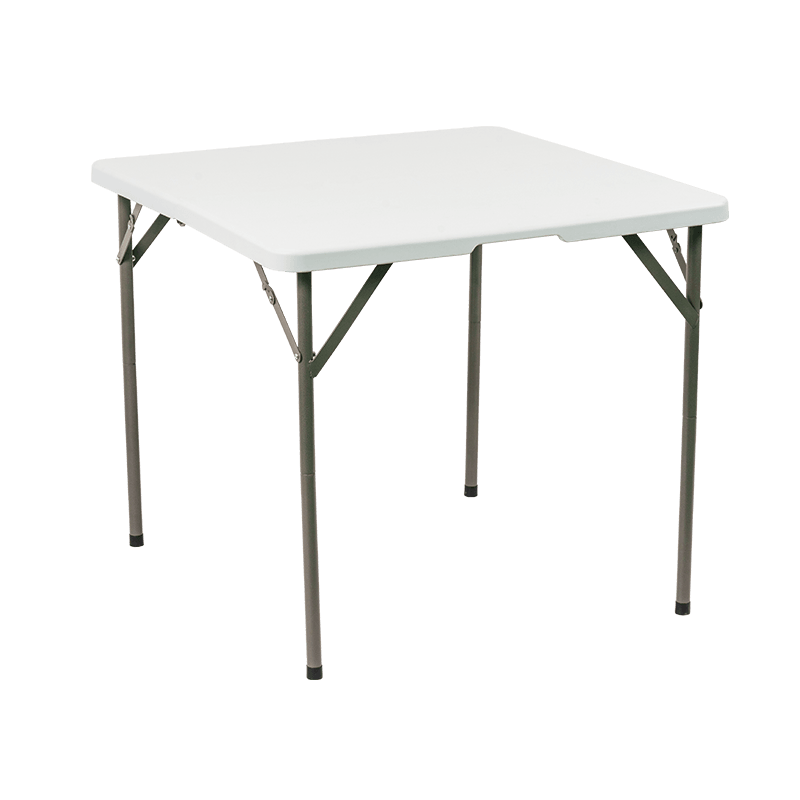
- Four independent legs. Each leg has its own hinge bracket and a spring-loaded lock. Most classic square card tables and rectangular dining tables work this way.
- Paired legs on a folding rail. Two legs share a rail that swings as one unit, so both legs close together in a single motion.
- A fold-in-half top. The tabletop itself has a center hinge, and the legs tuck inside before the two halves come together like a suitcase.
Identifying the type takes five seconds and prevents the most common mistake we see: forcing a leg in a direction the bracket was never designed to move.
The Basic Sequence That Works on Almost Every Card Table
If your table has four separate legs with locking brackets, this is the routine. It applies equally to a lightweight 122cm table and a heavy 240cm banquet model, though the bigger the table, the more you will want a second pair of hands.
- Clear the surface completely and wipe it down with a damp cloth. Crumbs and grit worked into a hinge are the number one cause of a stiff leg six months later.
- Let the top dry fully. On our HDPE tabletops, water beads and runs, so give it a minute rather than folding a wet surface against itself.
- Turn the table upside down onto a soft surface, or tip it onto its side if it is large. Grass, a moving blanket, or a piece of cardboard protects both the top and your floor.
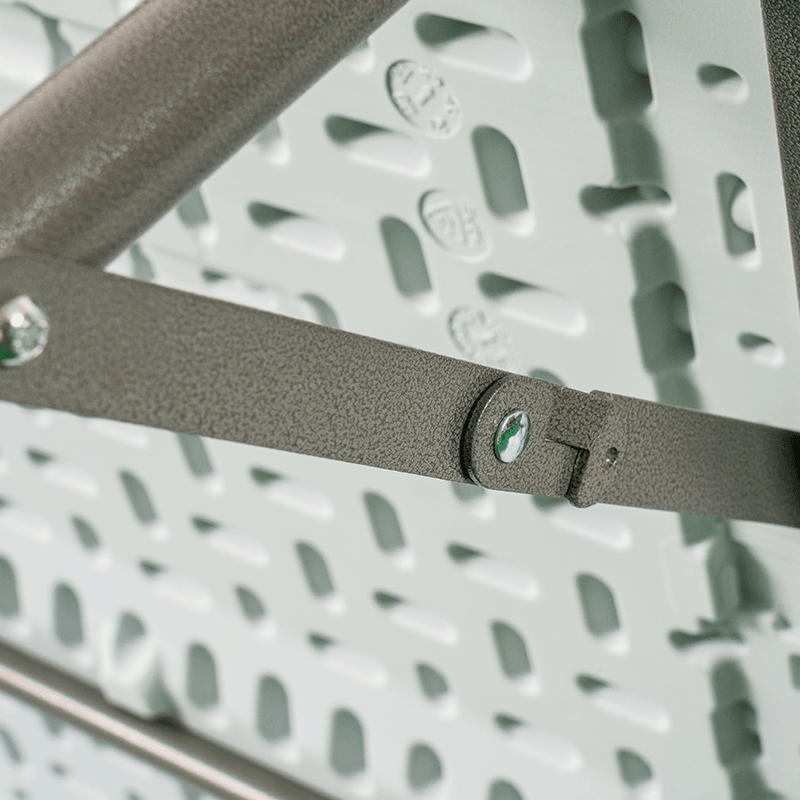
- Locate the release. On most brackets it is a spring tab you press toward the leg, or a lever you squeeze against the leg body. Press it and hold.
- With the release held, swing the leg inward until it lies flat against the underside of the top. Let go and listen for the click that tells you the lock has seated in the folded position.
- Repeat on the remaining legs, working in pairs (front pair, then back pair) so the table stays balanced while you work.
Once all four legs are flat, stand the table on edge or lay it flat for carrying. Never lift a folded table by one leg — the bracket takes the whole load and that is how hinges bend.
Closing a Fold-in-Half Table
Legs first, then the top
Fold-in-half tables close in a fixed order: legs, then top. Start with the table upside down and fold each leg flat exactly as described above. Some models have legs that nest into recessed channels in the underside — these only fold one way, so follow the shape of the recess rather than pushing against it.
With all legs tucked, stand the table on its edge and bring the two halves together using the carry handle if there is one. The handle should end up on the outside. Close it steadily rather than letting the halves drop shut, because a slammed hinge is the fastest way to crack the center seam on any folding top.
Mind the fingers
The center hinge closes with real force on a large table. Keep fingers clear of the seam and, on tables wider than about 150cm, ask someone to support the far half while you guide the near half down.
Common Mistakes We See Again and Again
- Forcing a locked leg. If a leg will not move, the release is not fully pressed. Stop and look, rather than adding pressure.
- Folding a dirty table. Grit trapped in a bracket wears the pivot pin and makes the leg loose over time.
- Dragging instead of lifting. Dragging a folded table across concrete scuffs the edge and can knock the leg out of alignment.
- Leaning a folded table on its legs. Stored that way for months, the brackets carry weight they were not designed to hold.
- Stacking heavy items on top. A folded table is not a shelf; a warped top never sits flat again.
A Quick Reference by Table Style
| Table style | Closing sequence | Main thing to watch |
|---|---|---|
| Four independent locking legs | Clean, dry, invert, release each lock, fold legs flat in pairs | Press the release fully before swinging the leg |
| Paired legs on a folding rail | Clean, dry, invert, release the rail catch, swing both legs together | Both legs must move as one unit; never fold them separately |
| Fold-in-half top with nested legs | Clean, dry, invert, fold legs into their recesses, then close the top halves | Close the hinge steadily and keep fingers clear of the seam |
Storing It So It Opens Easily Next Time
How you put a table away decides how it behaves when you pull it out again. Store a folded table upright against a wall with the legs facing in, or lay it flat on a dry shelf. Avoid standing it on a damp concrete floor through the winter — moisture wicks into the leg brackets and the pivot pins start to stiffen. Our guide to foldable winter storage covers the longer off-season routine in more detail.
If you are stacking several tables, put a cloth or a sheet of cardboard between them so the surfaces do not rub, and never place anything heavy on the stack.
If the Table Fights Back
A leg that suddenly refuses to fold is almost always one of three things: a release tab that needs a firmer press, grit lodged in the bracket, or a bracket that has been bent by lifting the table while folded. Clean the pivot area with a soft brush, check that the bracket sits square to the top, and try again. If a leg still will not lock in either position, stop using the table until the bracket is replaced — an unlocked leg can collapse under weight.
On plastic tables, a little silicone spray on the pivot pin (never oil, which attracts grit) will free up a stiff mechanism without leaving a residue on the surface.
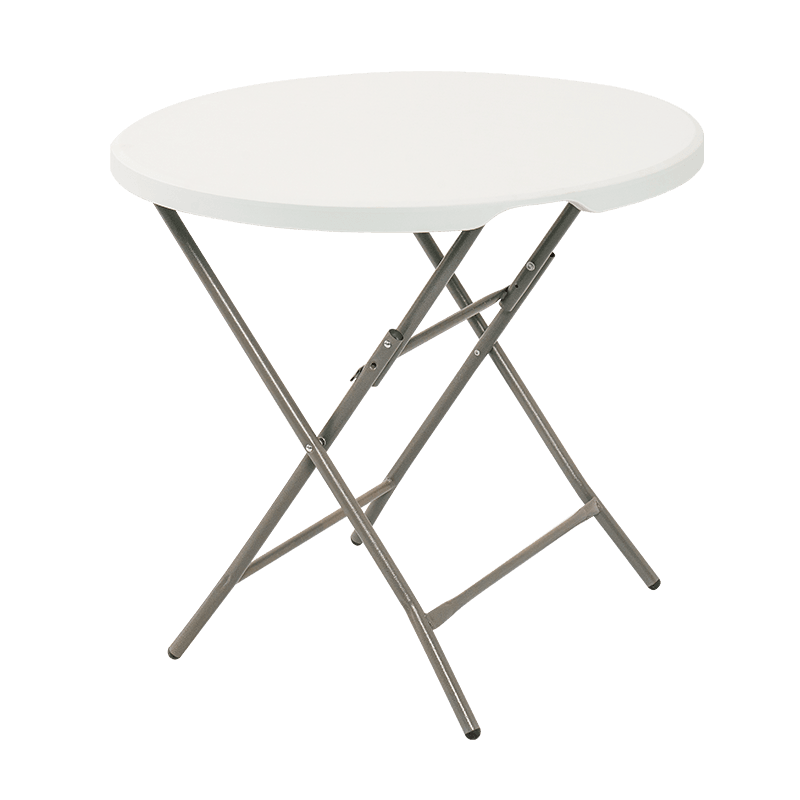
 86cm Portable Outdoor Dustproof Folding Square TableIts dust-, sand-, water- and UV-resistant square top and locking folding legs suit quick one-person setup for picnics, camping and family gatherings.View Product →
How We Build a Table That Closes Cleanly
Every table we make is folded and unfolded before it leaves the workshop. It is a small step, but it catches the things that annoy people later: a bracket that binds at the halfway point, a leg that needs two hands to release, a top that does not sit flush once opened. Our folding plastic tables are built around the same idea — a mechanism simple enough that anyone in the household can close the table in half a minute, and robust enough to do it a few thousand times.
If you are choosing a table for a venue, a rental fleet, or a busy family garden, the closing mechanism is worth as much attention as the size and finish. A table that folds easily is a table that gets used, stored properly, and brought out again next season without complaint.
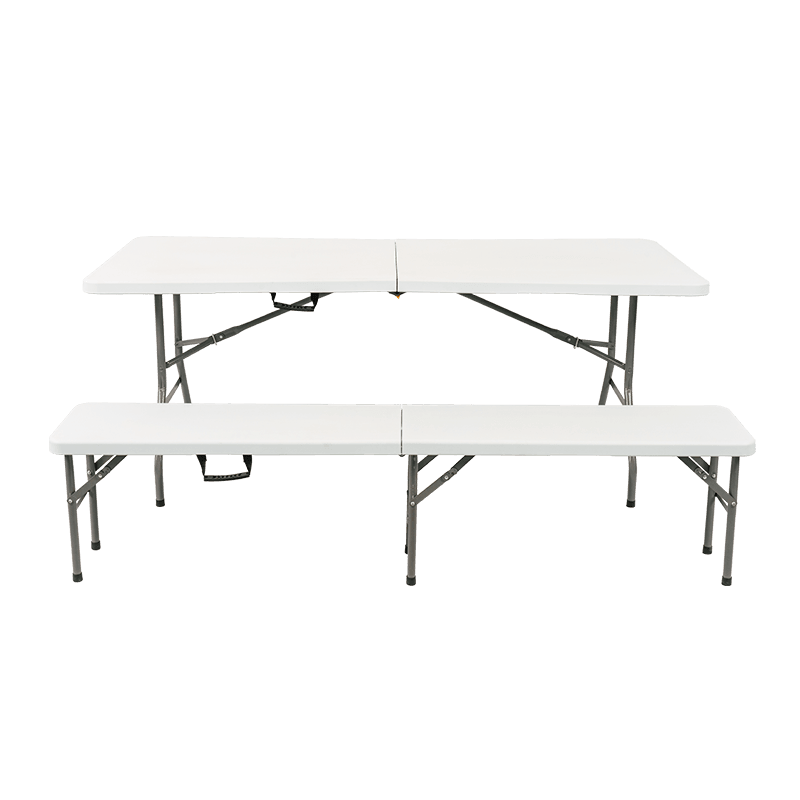 180cm Double-Sided Plastic Rectangular Folding Dining TableA dual-finish HDPE/PP top, 6–8 person seating and a braced folding frame make it suited to dining, events and rental use.View Product →
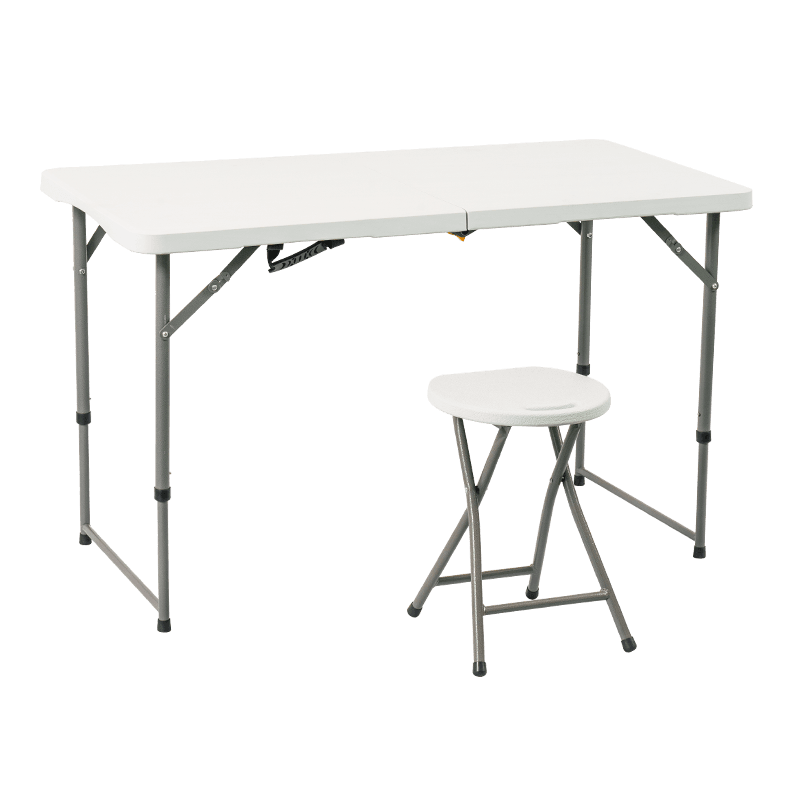 Lightweight 122cm White Plastic Folding TableWaterproof, anti-fouling top, locking legs and anti-slip pads make it a practical indoor/outdoor table for markets, classes and events.View Product →
Featured Products Showcase