English
 中文简体
中文简体
Author: HUIRUI
Date: Oct 07, 2026
How Many People Can Sit at a 6 Foot Rectangular Table? A Seating Guide
Content
- 1 The Short Answer: Six Comfortably, Eight at a Push
- 2 Why 72 by 30 Inches Became the Standard
- 3 Seating Capacity at a Glance
- 4 Side Seats vs. End Seats: Where the Extra Two Come From
- 5 What Changes the Count: Comfort vs. Maximum
- 6 How Much Room to Leave Around the Table
- 7 Choosing a Six Foot Folding Table and the Right Chairs
- 8 Setup and Storage Habits That Protect the Count
- 9 Frequently Asked Questions
Whether you are planning a backyard birthday, a wedding reception, or a new patio layout for a restaurant, the seating math matters more than most people expect. The question of how many can sit at a 6 foot rectangular table comes up in almost every event conversation, and the honest answer is six comfortably and eight at a stretch. The rest of this guide explains where those numbers come from, when they change, and how to plan a table setting that still feels generous rather than cramped.
The Short Answer: Six Comfortably, Eight at a Push
A standard 6 foot rectangular table measures 72 inches long and 30 inches wide. With three chairs along each long side, you seat six people in genuine comfort. Each diner gets roughly 24 inches of table edge, which is the accepted minimum for a plated meal. Add one chair at each end and the same table holds eight, which is why rental companies and banquet halls usually describe this size as six to eight.
Six is the number you book when you want guests to eat without bumping elbows. Eight is the number you book when the guest list grows and a little closeness at the table is an acceptable trade. Both answers are correct; they simply serve different kinds of gatherings.
Why 72 by 30 Inches Became the Standard
The 6 foot banquet table earned its place because it does several jobs well at once. It is long enough to seat a family or a small work group, narrow enough to pass through a standard doorway when folded, and light enough for one person to carry and set up. The 30 inch width is the other half of the equation. It leaves room for a dinner plate, a glass, and a shared serving dish without turning the table into a wide, unreachable slab.
Wider versions exist, usually 36 inches across, and they are useful when the table doubles as a buffet station or when centerpieces take up space. A wider table does not seat more people along the sides, though. It only gives each person more room in front of them.
Seating Capacity at a Glance
If you are ordering tables for a venue, a rental fleet, or a large family event, the table below is a quick reference. The figures assume chairs roughly 18 to 20 inches wide and a standard 30 inch table width.
| Table Size | Typical Length | Comfortable Seating | Maximum With End Seats |
|---|---|---|---|
| 4 ft | 48 in | 4 | 6 |
| 5 ft | 60 in | 4 | 6 |
| 6 ft | 72 in | 6 | 8 |
| 8 ft | 96 in | 8 | 10 |
Side Seats vs. End Seats: Where the Extra Two Come From
Most of the seating capacity of a rectangular table sits along the two long sides, and that is where guests are happiest. A side seat gives a diner a clear view of the room, easy access to the table, and a natural conversation partner on either hand.
End seats are the bonus. They suit a host who wants to move around, a child who needs a quick exit, or the guest who arrives late. They are also the seats that suffer first when the table is crowded, because an end chair needs clearance behind it. Aim for 32 to 36 inches of free floor so the person sitting there is not trapped between the table and a wall.
What Changes the Count: Comfort vs. Maximum
Two planners can look at the same 6 foot table and reach different numbers without either being wrong. What separates a comfortable six from a tight eight is a short list of practical factors.
- Chair width. Slim plastic folding chairs at about 18 inches keep the count high, while padded chairs and armrests eat 2 to 4 inches each.
- Meal style. A plated dinner needs roughly 24 inches per person, while a buffet or a picnic spread can work with 18 to 20.
- Guest mix. Children take less room, but a wheelchair or a high chair has to be planned for rather than squeezed in.
- Tablecloth and legs. Folding leg braces and skirted cloths can limit where a chair tucks in.
- Length of the occasion. A thirty minute slice of cake is a different proposition from a three hour dinner.
How Much Room to Leave Around the Table
The table itself is only part of the layout. Leave space for the people sitting at it and for the people serving them.
As a rule, allow 24 inches of table edge per diner, then 32 to 36 inches behind each chair so guests can push back and stand up. If servers need to pass behind seated guests, push that distance toward 42 inches. For a 6 foot table with both end seats in use, that means a clear floor area of roughly 10 feet by 8 feet, which is worth measuring before you promise a venue that the layout will work.
Choosing a Six Foot Folding Table and the Right Chairs
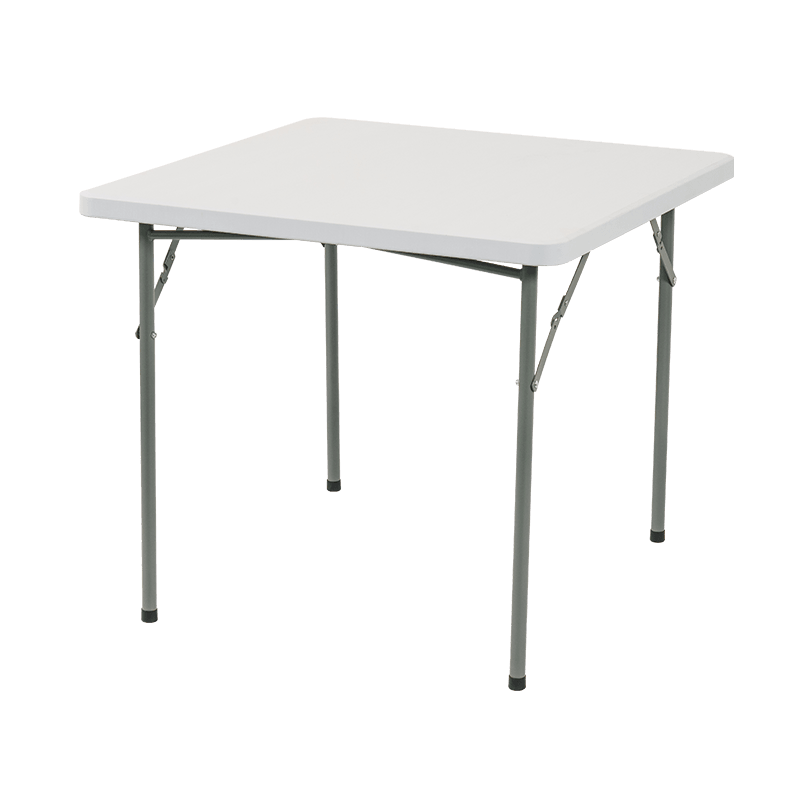
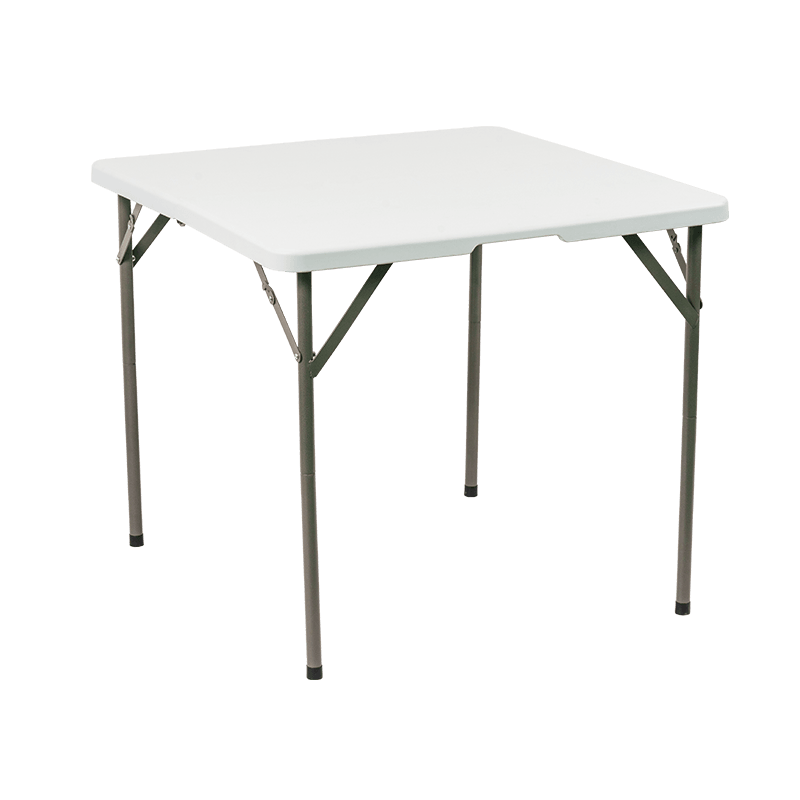
Capacity is only the start of the decision. At Yuyao Huirui Leisure Products, we manufacture plastic folding tables and chairs for homes, restaurants, and event suppliers, so we spend a lot of time matching table length to chair width and to the way a space is actually used. Our 180cm rectangular dining table is a natural answer to the 6 foot question: it offers the same six to eight seat range, a double-sided surface that wipes clean, and legs that fold flat for storage between events.
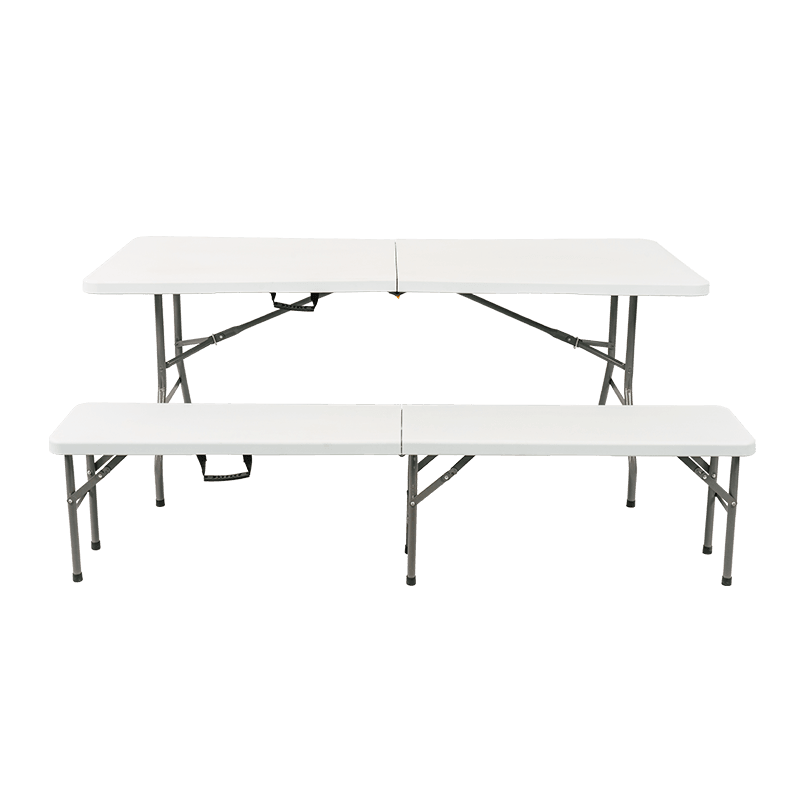 180cm Double-Sided Plastic Rectangular Folding Dining TableThis table offers six to eight seats with a wipe-clean, weather-resistant surface. Its foldable legs suit event spaces where easy storage and flexible seating matter.View Product →
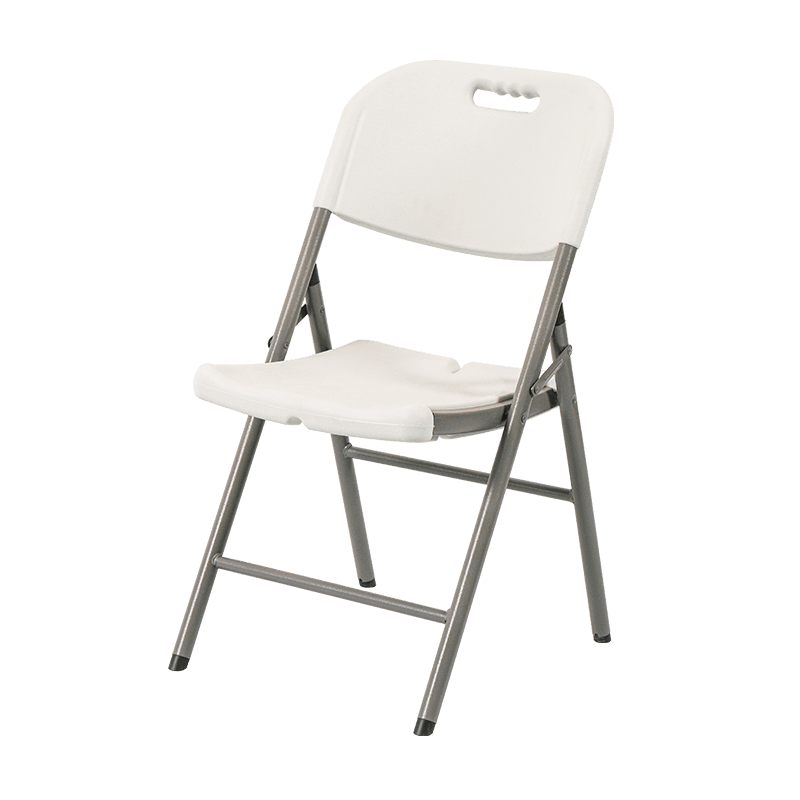
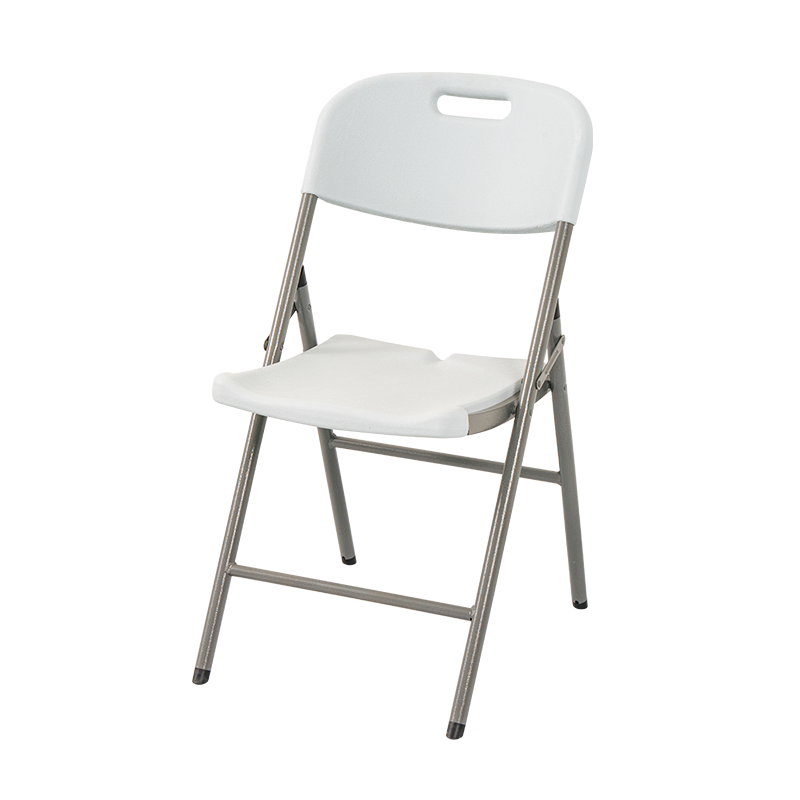
Chairs are the other half of the equation. A slim folding chair keeps the count at eight, while a wider seat with a backrest pulls it back toward six. Our portable outdoor garden folding chair sits firmly in that first group, which is why it works well along long tables where every inch of edge matters.
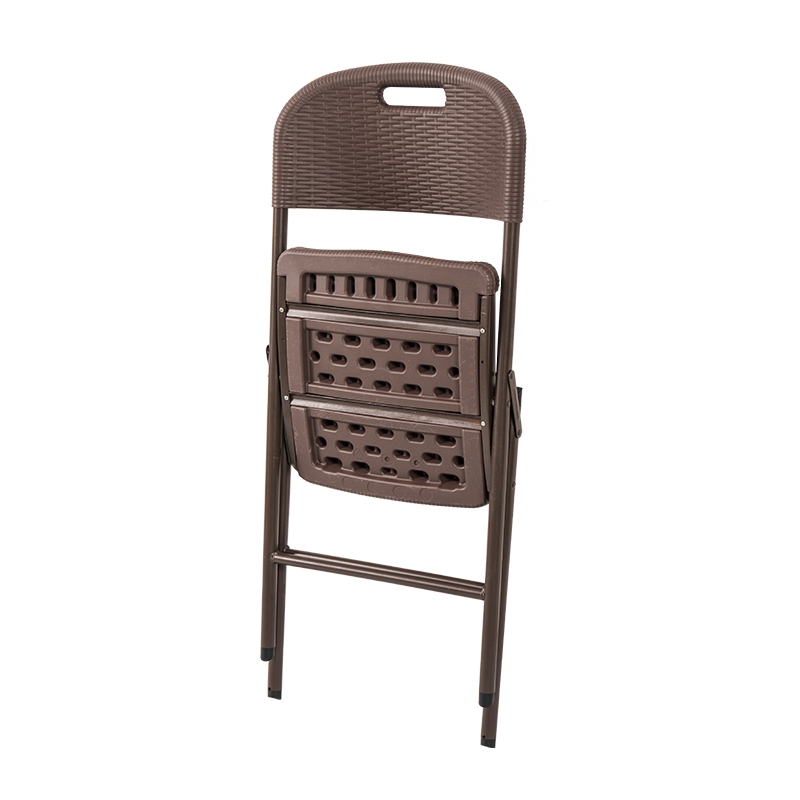 Portable Outdoor Garden Plastic Folding ChairA slim folding chair that keeps long-table seating at eight. Its lightweight, weather-resistant plastic design makes it practical for outdoor gatherings and tight spaces.View Product →
Smaller rooms call for a shorter table rather than a crowded one. The 152cm self-service dining table seats four to six, folds in half, and still carries the easy-clean, weather-resistant surface that our folding plastic tables are known for. When the event ends, everything stacks and slides into a corner, which is the advantage we build into every space-saving folding design.
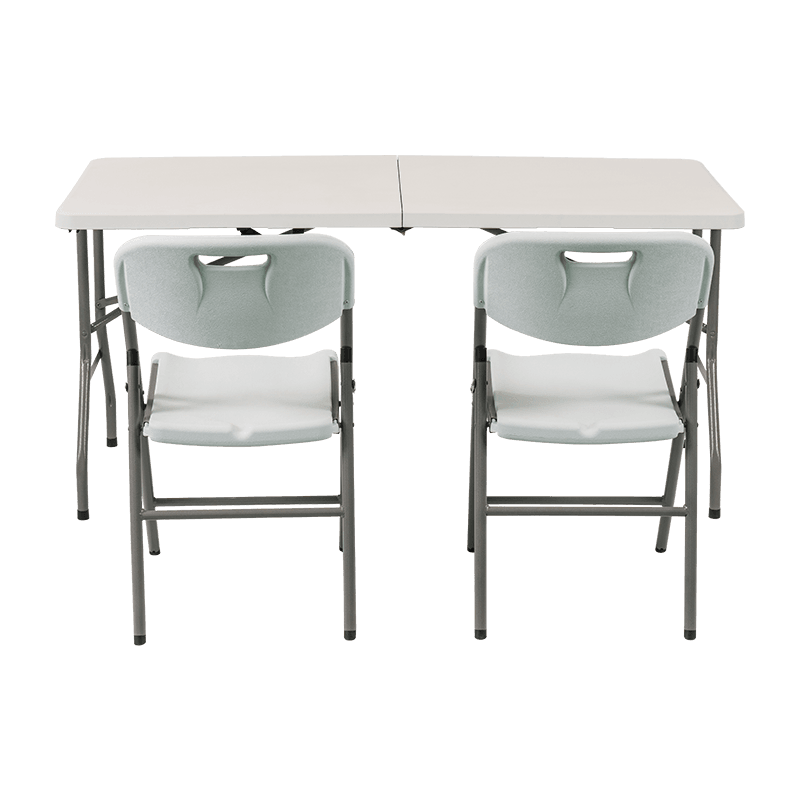 152cm Foldable Camping Self-Service Dining TableA compact folding table for four to six people, featuring a durable, easy-clean surface and foldable design for convenient storage. A space-saving choice for smaller rooms or events.View Product →
Setup and Storage Habits That Protect the Count
A few simple habits keep a folding table seating the same number of people season after season.
- Set the table on level ground and lock every leg brace before any chair arrives.
- Space chairs evenly along each long side, then add end chairs only where clearance allows.
- Wipe the surface after use and let it dry fully before folding it away.
- Store folded tables upright in a dry place, out of prolonged direct sun.
- Keep a small capacity note with the table so nobody has to guess next time.
Frequently Asked Questions
How many people fit at a 6 foot table with a buffet setup?
Six to eight, but the comfortable figure drops toward six because guests stand, reach, and move around. If the table also holds the food, plan for four to six diners and place serving dishes at the ends.
Can you squeeze ten people onto a 6 foot rectangular table?
You can, but nobody will enjoy it. Ten people across 72 inches leaves roughly 14 inches of edge each along the sides, barely wider than a dinner plate. An 8 foot table is the better answer.
Is a 6 foot round table the same as a 6 foot rectangular one?
No. A 72 inch round table seats eight to ten because it has more usable edge and no corners. A rectangular table seats fewer people at the same overall size, but it fits better against walls and in narrow rooms.
Do end seats still count if one end is against a wall?
No. If one end is blocked, treat the table as a six-person table and count only the seats a guest can reach without climbing over anyone.
A 6 foot rectangular table is one of the most useful sizes you can own or rent. It seats six people properly, eight at a push, and it fits spaces that larger banquet tables cannot. Measure the room, respect the 24 inch rule per diner, and choose chairs that match the width of the table instead of fighting it. Do those three things and your seating plan will hold up on the day, whether the guests are family, customers, or a full restaurant patio.
Featured Products Showcase