English
 中文简体
中文简体
Author: HUIRUI
Date: May 20, 2026
How to Fold Up a Folding Table: Complete Guide
Content
- 1 How to Fold Up a Folding Table Step by Step
- 2 Types of Folding Table Latches and How Each Works
- 3 Folding Different Sizes of Plastic Folding Tables
- 4 How to Fold Up an Outdoor Plastic Folding Table Safely
- 5 Common Mistakes When Folding a Plastic Folding Table
- 6 Maintaining Your Portable Folding Table for Long-Term Use
- 7 Choosing the Right Portable Folding Table for Your Needs
To fold up a folding table, clear the surface, locate the central locking latch underneath, press or slide it to release, then fold both leg sets inward until they click flat against the tabletop. Most plastic folding tables — whether used indoors or outdoors — follow this same core mechanism, though latch styles vary slightly by brand. This guide walks you through every step, covers different table types, and shares pro tips to extend your table's lifespan.
How to Fold Up a Folding Table Step by Step
Following the correct sequence prevents damage to the locking mechanism and keeps you safe during the process. Here is the standard method that works on over 90% of plastic folding tables sold today:
- Clear the tabletop completely. Remove all items — plates, drinks, decorations — before attempting to fold. Even a lightweight object can throw off your balance when tilting the table.
- Flip or tilt the table on its side. For small portable folding tables (under 4 ft), you can flip it upside down. For larger 6–8 ft banquet tables, tilt it onto its long edge instead.
- Locate the central latch or locking bar. Look under the tabletop near the center crossbar. Most plastic folding tables have a metal or plastic slide latch that locks the legs open.
- Release the latch. Push, slide, or press the latch toward the center (the direction varies by model). You should feel or hear a click as it disengages.
- Fold the first set of legs inward. With the latch released, push one pair of legs toward the tabletop. They should swing smoothly on their hinges.
- Fold the second set of legs inward. Repeat on the other side. Some tables have a single folding unit; others have two independent leg sets.
- Confirm the legs are fully flat. Press gently to ensure both leg sets lie flush against the underside. A partially folded table can collapse unexpectedly during storage or transport.
- Store upright or in a carry bag. Most portable folding tables are designed to stand on their folded edge for compact vertical storage or slide into a dedicated carry bag.
The entire process typically takes under 30 seconds once you are familiar with your table's latch style.
Types of Folding Table Latches and How Each Works
Not all plastic folding tables use the same locking system. Knowing your latch type saves frustration and prevents accidental breakage.
| Latch Type | How to Release |
|---|---|
| Slide Latch | Push the metal bar toward the center of the table |
| Button / Trigger Latch | Press the plastic button inward while pushing legs flat |
| Gravity / Cam Latch | Lift the leg slightly before pushing inward |
| No-Latch (Friction Fold) | Simply push legs inward — they fold via friction hinges |
If your latch feels stiff, do not force it. A drop of WD-40 or silicone spray on the hinge point usually resolves resistance within minutes.
Folding Different Sizes of Plastic Folding Tables
Plastic folding tables come in several standard sizes, and size directly affects how you handle them during folding.
Small Portable Folding Tables (2 ft – 4 ft)
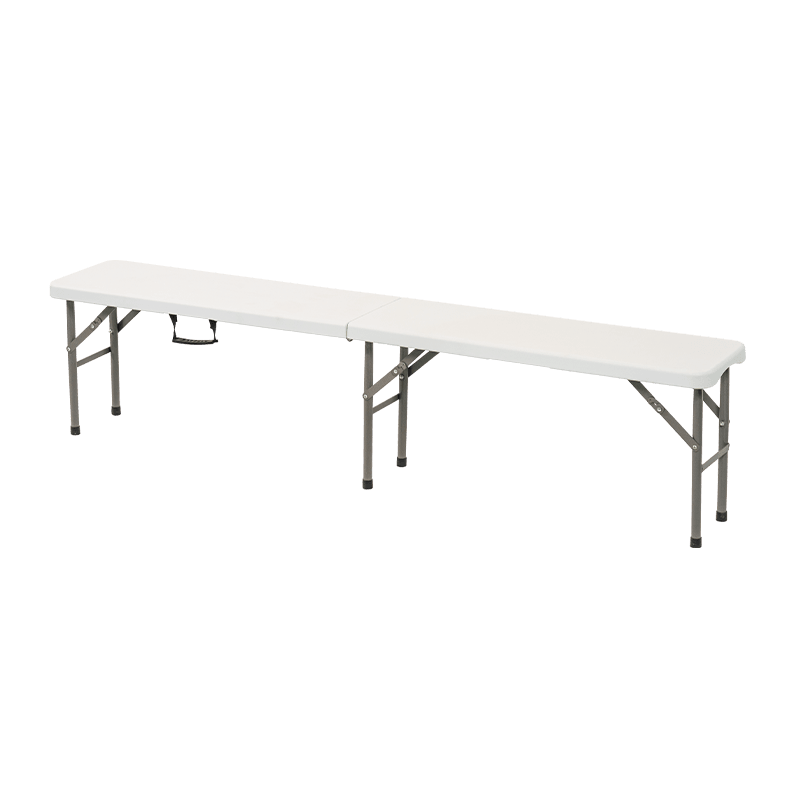
These lightweight tables — typically weighing 8–15 lbs — can be folded solo by one person in seconds. You can flip them upside down on a soft surface before releasing the latch. Many come with a carry handle built into the folded profile, making them ideal for camping, tailgating, and picnics.
Standard 6-Foot Plastic Folding Tables
The 6-foot rectangular table is the most common size for events and outdoor use. It typically weighs 20–30 lbs. Tilt it onto its long edge rather than flipping it to avoid strain. Release both leg latches — these tables almost always have two independent locking bars, one per leg set.
8-Foot Banquet and Outdoor Plastic Folding Tables
At 30–45 lbs, an 8-foot outdoor plastic folding table is best folded with two people. One person steadies the table while the other releases the latches and folds each leg set. Attempting this solo risks the table tipping and damaging the hinge mechanism or causing injury.
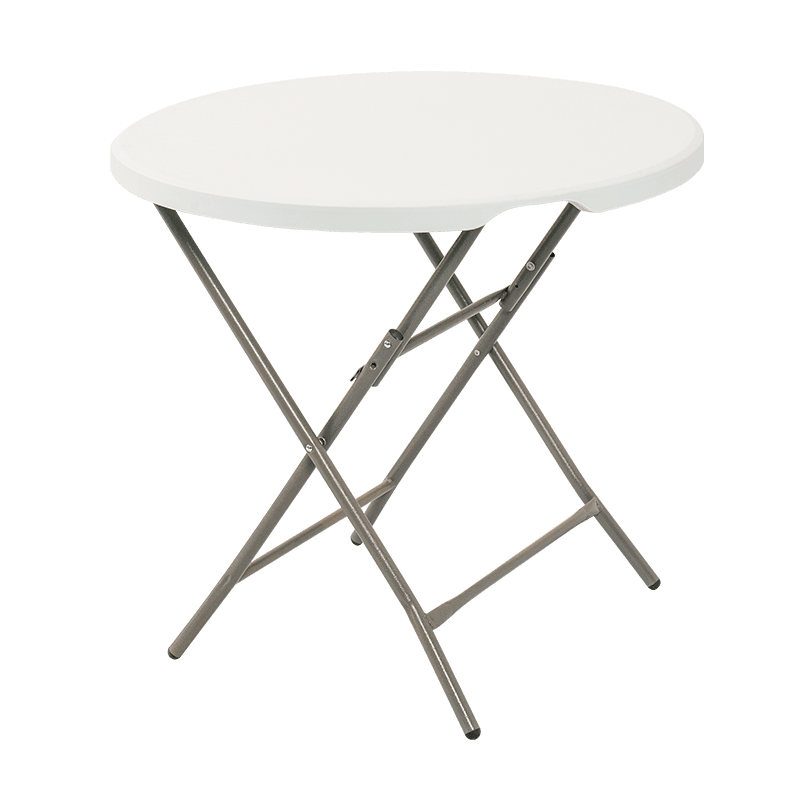
Round Plastic Folding Tables
Round folding tables, common at weddings and banquets, typically use a single center pedestal fold or a four-leg inward-fold design. Tilt the table on its edge, locate the single central latch underneath, release it, and push all legs inward simultaneously.
How to Fold Up an Outdoor Plastic Folding Table Safely
Outdoor plastic folding tables face extra wear from UV exposure, moisture, and uneven terrain. Take these specific precautions when folding them after outdoor use:
- Dry the table before folding. Folding a wet table traps moisture inside the hinge and leg channels, accelerating rust on metal parts and mold growth. Wipe down the legs and underside with a cloth first.
- Check for debris in the hinges. Outdoor use means dirt, grass, and sand can pack into the latch mechanism. A quick brush or rinse prevents the latch from jamming mid-fold.
- Watch for UV-weakened plastic. Plastic exposed to direct sunlight for 3+ years can become brittle. If you notice white chalking or micro-cracks near the hinge points, apply extra care and consider replacing the table before the next heavy-use event.
- Fold on flat ground. Folding on uneven terrain causes one side to bear more weight, stressing the frame asymmetrically. Move the table to a flat surface whenever possible.
- Store away from direct sunlight. Once folded, store your outdoor plastic folding table in a shed, garage, or protective cover to dramatically extend its service life.
Common Mistakes When Folding a Plastic Folding Table
Even experienced users make these errors. Avoiding them protects both the table and the people around it.
- Forcing a stuck latch. Forcing a jammed latch is the leading cause of broken folding mechanisms. Instead, apply lubricant, wiggle the leg slightly to relieve pressure, then try again.
- Not clearing the tabletop first. A single forgotten cup can tip the table as you tilt it, resulting in spills or injury.
- Folding only one leg set. On two-latch tables, folding only one side and carrying the table puts enormous torque on the single folded hinge. Always fold both sides before moving.
- Storing without confirming legs are locked flat. Legs that are not fully locked in the folded position can spring open during storage, potentially damaging other stored items or creating a hazard.
- Dragging instead of carrying. Dragging a folded plastic table across pavement or concrete damages the leg feet and frame corners. Always carry it — or use a wheeled transport cart for heavy banquet tables.
Maintaining Your Portable Folding Table for Long-Term Use
A well-maintained plastic folding table can last 10–15 years with moderate use. Here is a simple maintenance schedule:
| Frequency | Task | Why It Matters |
|---|---|---|
| After every outdoor use | Wipe down and dry all metal parts | Prevents rust on hinges and locking bars |
| Every 3 months | Apply silicone spray to hinges and latches | Keeps folding mechanism smooth |
| Every 6 months | Inspect leg feet for cracks or missing caps | Prevents scratching floors and uneven standing |
| Annually | Check all screws and bolts for tightness | Loose hardware causes wobbling and hinge stress |
| Annually (outdoor tables) | Apply UV protectant spray to the plastic surface | Slows UV degradation and surface chalking |
Choosing the Right Portable Folding Table for Your Needs
If you are shopping for a new plastic folding table, the ease of folding should be a key decision factor alongside weight capacity and size.
- For solo use and portability: Choose a 4-foot fold-in-half portable folding table with a carry handle.
- For outdoor events: A 6-foot outdoor plastic folding table with UV-resistant HDPE (high-density polyethylene) top and powder-coated steel legs offers the best durability-to-weight ratio.
- For frequent setup and teardown: Look for tables with a single central latch rather than two separate latches — they are consistently 30–40% faster to fold and unfold in high-volume event settings.
- For heavy loads: Verify the static weight capacity. Commercial-grade plastic folding tables support 500–1,000 lbs, while budget models may be rated as low as 200 lbs.
Always verify that replacement leg feet and latch hardware are available for your chosen brand before purchasing — this directly affects the long-term repairability of your table.
Featured Products Showcase