English
 中文简体
中文简体
Author: HUIRUI
Date: Jul 22, 2026
Collapsible vs Folding Stool: Which Portable Seat Do You Need?
Content
- 1 Collapsible vs Folding Stool: The Key Difference
- 2 How Each Mechanism Actually Works
- 3 Side-by-Side Comparison
- 4 Safety Features Worth Checking Before You Buy
- 5 Plastic Folding Stool: Materials and Weight Capacity
- 6 Why One-Piece Molded Plastic Often Outlasts Metal Joints
- 7 Care Tips to Extend the Life of Either Stool Type
Collapsible vs Folding Stool: The Key Difference
A folding stool opens outward using hinged legs that lock into place, while a collapsible stool expands vertically using a telescopic design that compresses down to a much smaller footprint. In practical terms, a folding stool works like a miniature hinge-based chair, while a collapsible stool works more like a camera tripod — it slides open and closed along its own axis rather than pivoting outward.
Choose a folding stool if you want maximum stability, a hard seat surface, and don't mind a slightly larger stored size — this is the category that includes most plastic folding stools. Choose a collapsible stool if pack size and weight matter more than raw stability, such as for backpacking, delivery work, or fitting a seat into a small bag. The rest of this guide breaks down the mechanism, weight capacity, and material differences in detail, with a dedicated section on plastic folding stools specifically.
How Each Mechanism Actually Works
The terms "collapsible" and "folding" are often used interchangeably in casual conversation, but they describe genuinely different engineering approaches.
Folding stools: hinge-based operation
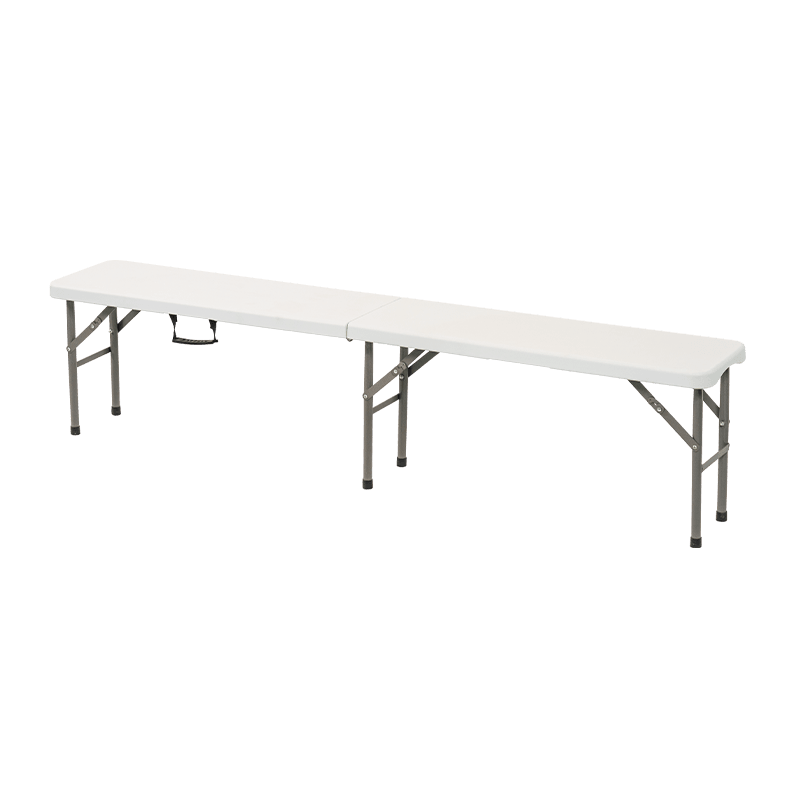
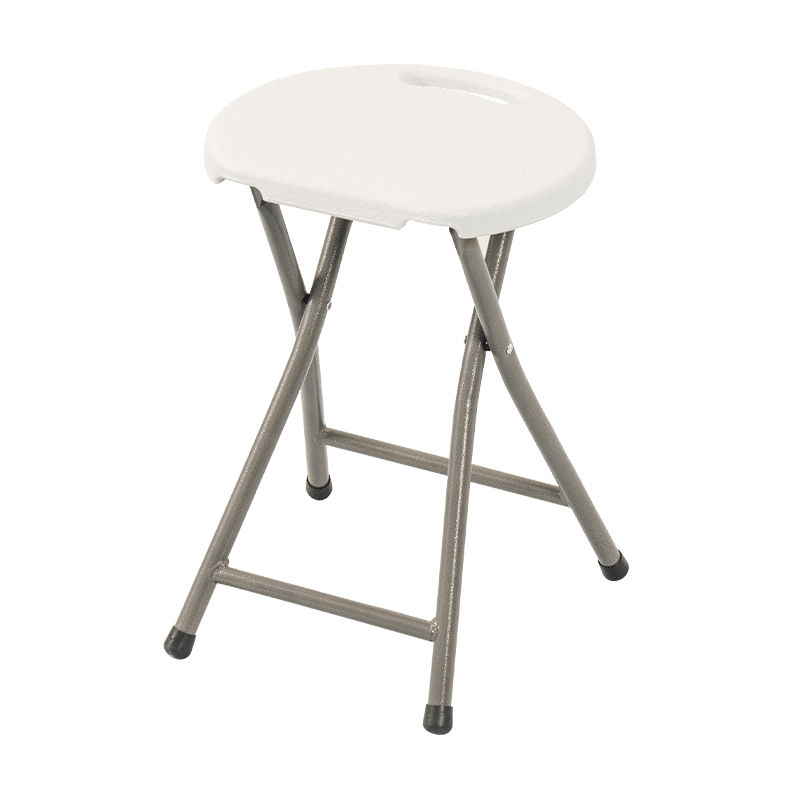
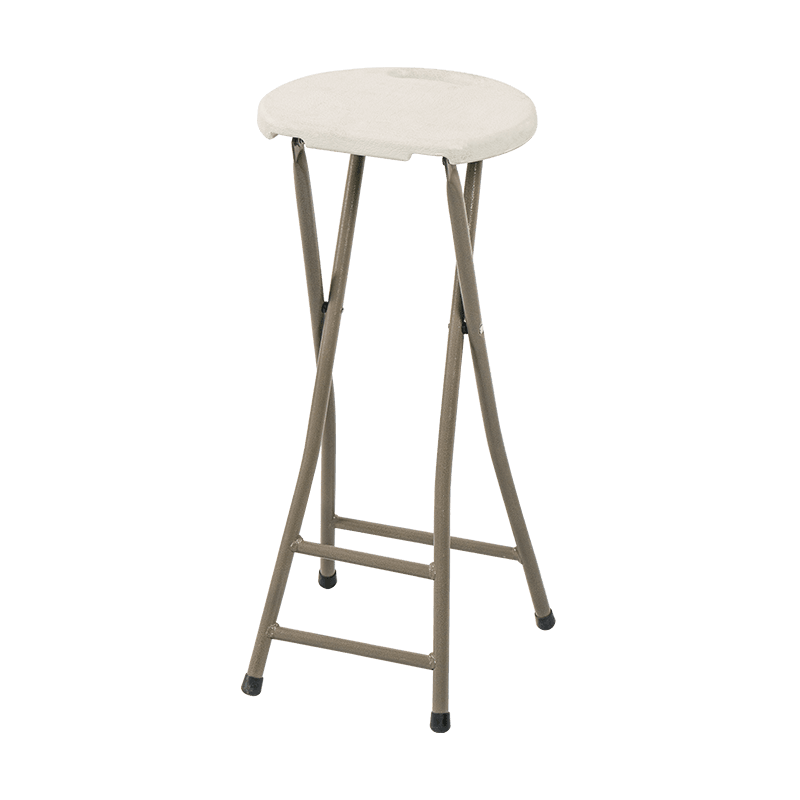
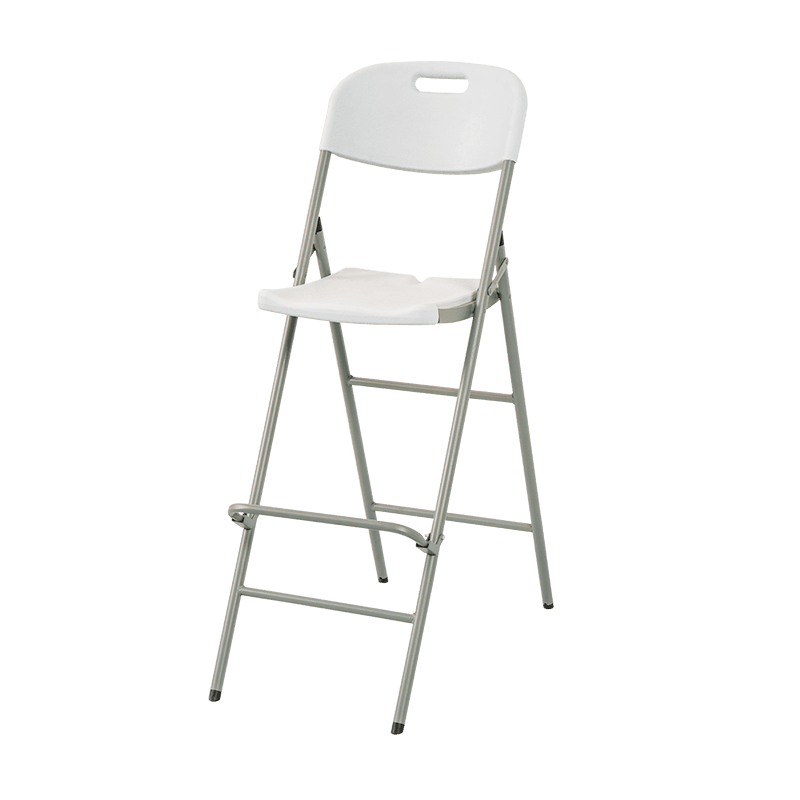
A folding stool operates through a basic hinge mechanism — the legs need to be unlocked, swung outward, and locked back into place before the stool is ready for use. The structure typically pairs metal or plastic frames with either a fabric or hard plastic seat, and this category is common at backyard parties, on fishing trips, and around campsites.
Collapsible stools: telescopic operation
A true collapsible stool typically disassembles or telescopes down into a compact form, in some cases small enough to fit into a large pocket or bag pouch. Rather than hinging outward like a chair, the structure slides or nests together along a central axis, which is what allows it to pack down so much smaller than a comparable folding model.
Side-by-Side Comparison
The table below summarizes the practical trade-offs most buyers care about when choosing between the two categories.
| Factor | Folding Stool | Collapsible Stool |
|---|---|---|
| Opening mechanism | Hinged legs, swing outward | Telescopic, expands vertically |
| Stored size | Larger, folds flat | Very compact, more portable |
| Stability | Generally higher, wider stance | Lower center of gravity, less stable on inclines |
| Typical seat material | Hard plastic or fabric | Fabric or minimal padding |
| Best use case | Camping, backyard events, fishing | Delivery work, backpacking, urban commuting |
Safety Features Worth Checking Before You Buy
Modern stools in both categories increasingly include design details that directly affect how safe and stable the stool feels in daily use.
- Self-open prevention lock: keeps the stool securely closed during transport, preventing it from popping open in a bag or trunk.
- Anti-slip feet: create stable ground contact, particularly important on smooth or slightly uneven surfaces.
- Easy-grip handles: make the stool easier to carry and also assist with opening and closing it.
- Structured interlocking design: provides noticeably better resistance to sideways wobble compared to a thin-leg design.
Regardless of category, always scout for level ground before setting up any portable stool — sitting on inclines, rocks, or slippery surfaces increases the risk of tipping or slipping, and this risk exists whether the stool folds or collapses.
Plastic Folding Stool: Materials and Weight Capacity
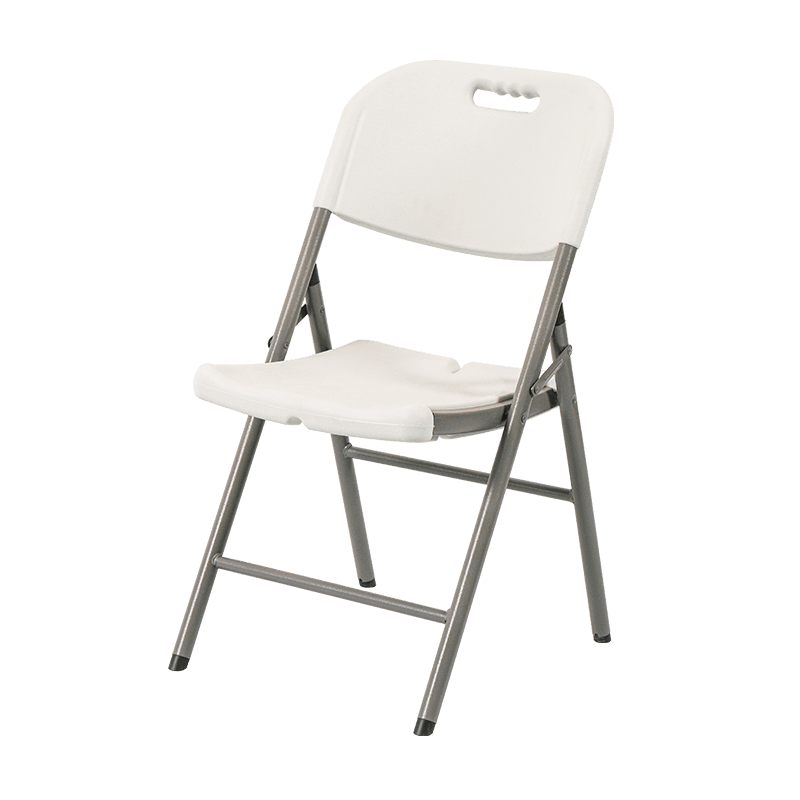
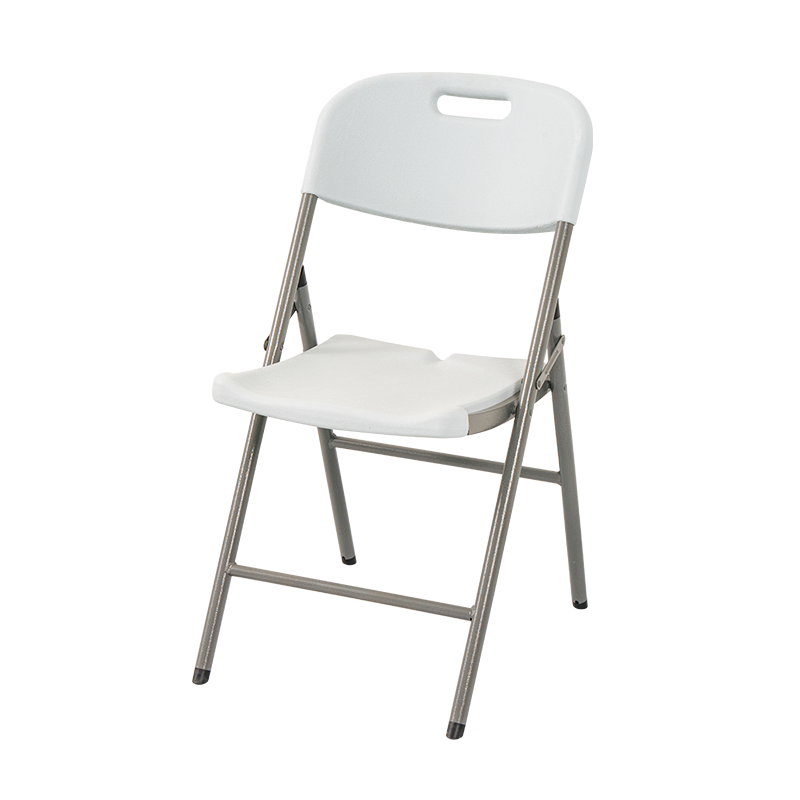
Plastic folding stools deserve their own section because the material choice inside "plastic" varies significantly, and it directly determines how much weight the stool can safely support.
| Material | Key Property | Typical Weight Capacity |
|---|---|---|
| HDPE (high-density polyethylene) | High tensile strength, impact-resistant | 200 – 300 lbs |
| Polypropylene (PP) | Affordable, versatile, moderate durability | Up to ~225 lbs (pure PP) |
| Reinforced PP (glass fiber) | Added stiffness and load tolerance | Up to ~300 lbs |
| ABS plastic | Balance of strength and flexibility | 200 – 300 lbs |
| Metal frame + molded plastic seat (hybrid) | Superior stability, reduced wobble | 250 – 300+ lbs |
Most standard plastic folding stools safely hold between 200 and 300 pounds, though this depends heavily on the specific plastic grade, wall thickness at load-bearing points, and manufacturing quality. As a rule of thumb, wall thickness under 4mm at the ribs is consumer-grade, while 5–6mm ribbed construction signals genuine heavy-duty performance.
Why One-Piece Molded Plastic Often Outlasts Metal Joints
A common assumption is that metal stools are inherently more durable than plastic ones, but the failure data doesn't fully support that for everyday, moderate-load use.
One-piece molded plastic construction has no welded or riveted joints — the points where metal stools typically fail first. Stress distributes through the entire shell instead of concentrating at a weld's heat-affected zone, which is a documented weak point in welded aluminum and steel frames. In accelerated testing, an HDPE stool rated for a standard duty class was able to cycle through more than 50,000 load cycles — roughly the equivalent of 13 years of twice-daily use — before showing measurable fatigue.
That said, plastic isn't universally superior: HDPE and PP models generally top out around 300 lbs even in their sturdiest form, while steel and fiberglass can reliably exceed that threshold. For residential and light-commercial use under 300 lbs, a quality plastic folding stool will typically outlast an entry-level steel or aluminum equivalent; above that weight threshold, metal or fiberglass construction becomes the safer choice.
Care Tips to Extend the Life of Either Stool Type
Both collapsible and plastic folding stools rely on smooth-operating mechanisms, and most premature failures come from handling rather than manufacturing defects.
- Never force a stool to open or close — hinges and telescopic lock components can crack or bend under forced pressure, and patience during folding preserves the mechanism's lifespan.
- Always check the specific folding and unfolding instructions for your model, since lock mechanisms vary between brands even within the same stool category.
- Avoid dynamic loads such as jumping or sudden shifts of weight, since a stool rated for a certain static weight can still fail under sudden stress that exceeds its structural design.
- Store the stool dry and avoid prolonged exposure to extreme heat or cold, since temperature swings and UV exposure can weaken plastic joints and snap-fit connections over time.
- Inspect hinge pins and lock points periodically for visible play, particularly after heavy or frequent use, since repeated open-close cycles can gradually reduce a stool's real-world load capacity even before visible damage appears.
Featured Products Showcase